

On Common Ground

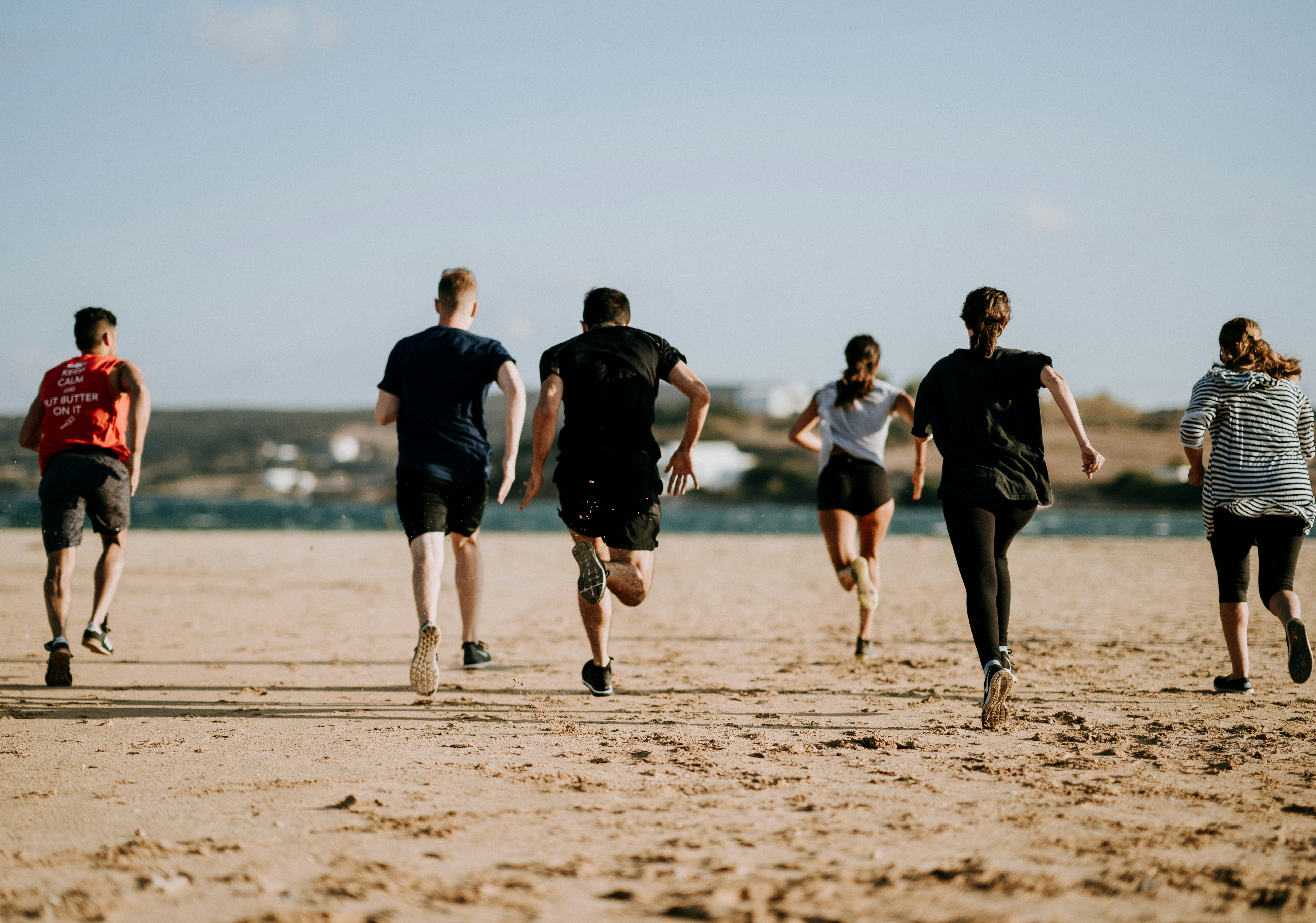
What began as a difference of opinion with a family member during a phone call last weekend became a standoff over our views on immigration. Whichever way the discussion went, we could not find common ground.
As the wife of a person of colour who has been abused while walking down the street because they looked different. And as someone whose decision to marry that person I loved was questioned because they were raised in another culture, my opinions are shaded by my lived experience, my story. So, sadly, and unsurprisingly, by the end of the call our conversation went nowhere.
But ever since I put down the phone, I’ve been thinking about how I might have done better. The solution came to me while out walking early this morning when I was passed by a group of runners. Each was jogging on the same path, along identical terrain, but every one of them had a very different running style or gait. The shortest man picked up his heels so they almost touched his bottom. His friend, who seemed to have a longer stride, planted his whole foot, heel to toe, on the ground. One of the group ran on tiptoe; the other swung their arms wide, elbows at right angles.
None of them were running wrong. They were running the way being in their particular body had taught them to run. If you’d stopped any one of them and asked them to switch to somebody else’s stride, they’d have stumbled.
I wondered whether that’s what I’d been doing on the phone. Trying to persuade someone to change their gait mid-run.
My family member and I were, in our own way, headed towards the same idea. A fairer world. A kinder one. But the road that brought each of us to a similar place was made up of very different terrain. And in the moment, I failed to see that. We spent the whole call trying to convince each other to run our way. Neither of us moved an inch closer to the other. We just got tired.
It turns out that common ground isn’t something you arrive at by insisting that your pace and stride must be matched. It begins by understanding that the very ground under each of you is different, and always has been.
I could have asked: what taught you to believe this? What’s your story?
I don’t know if those questions would have changed their mind or whether their answers would have changed mine either. But they might have kept us walking the same path a little longer.
Next time, instead of trying to convince people to go at my pace, I’ll stay curious for long enough to understand how they landed on their story.
Perhaps the better way to find common ground is to first acknowledge our uncommon ground.
Bernadette I have been exploring this for years ever since I read about the Backfire Effect over a decade ago. Simply put, this is the concept that when someone holds a strong belief that is tied to their identity, values or worldview, if you present contradictory facts or argue against their position, they will mor than likely strengthen their original belief rather than change it. This is a simple structure that can help shift views and attitudes: 1. Connect to establish shared values. 2. Understand by asking questions and then listen. 3. Explore so you examine assumptions together. 4. Share by offer information rather than arguing your case. 5. Leave space i.e. allow people to reconsider in their own time.
Bernadette, the image of the runners was illuminating. It really is a miracle that a pack of differently sized runners, each with a unique stride, can stay together.
Your piece reminded me of Katherine Hayhoe's approach in Saving Us. Early in her career, this Canadian-born climate scientist found herself teaching at a Texas university, surrounded by people who were often skeptical of climate change.
Her approach is similar to what you were describing. She begins her conversations with curiosity, asking, "What brought you here? How did you arrive at those views?" And then she takes one more step. She tries to point out whether, despite the different paths they may be on, "Aren't we running toward the same finish line?"
For example, if she's talking with a young mother, she doesn't begin with climate science. She begins with, "I imagine you want your children to flourish. So do I." Once the destination is agreed upon, the debate over the route becomes much less threatening.
I can see how curiosity helps us understand each other's journeys. And I can also see that shared values help us discover we're often travelling toward the same destination.
You really pull me into thinking more deeply on these important topics, Bernadette. Thank you!